Choosing the right material for an automotive emblem is not a simple design decision. It is a decision that affects durability. It affects cost. It affects how a brand is perceived over time.
Many emblems look similar when they are new. After months of heat, rain, vibration, and cleaning, the differences become obvious. Some keep their finish. Some fade or peel. Some crack or lose adhesion.
This is why material choice matters more than most people expect.
In this guide, we focus on the real performance of automotive emblem materials. Not theory. Not marketing language. Real use in production and aftermarket conditions.
Article guidelines
- Why material choice affects emblem lifespan?
- How metal and plastic perform in real conditions?
- What manufacturers consider before production?
Why Automotive Emblem Materials Matter More Than Design
Design attracts attention. Materials determine longevity.
An emblem may look perfect in a showroom photo. If the material is wrong, that same emblem can fail in real use. Customers rarely blame the material. They blame the brand.
Automotive emblems are exposed parts. They face sunlight. They face temperature changes. They face moisture. They face vibration. Interior emblems deal with friction and cleaning chemicals. Exterior emblems deal with UV and weather.
Material choice decides how well an emblem survives these conditions.
This is why experienced manufacturers always start with material evaluation before production begins.
Common Misunderstandings About Emblem Materials
One common mistake is assuming that all metal emblems are premium. Another is assuming plastic emblems are low quality. Both ideas are wrong.
Metal can look premium but fail if surface treatment is poor. Plastic can perform extremely well when engineered and processed correctly.
Another misunderstanding is focusing only on appearance. Many buyers choose materials based on how an emblem looks on day one. Few consider how it looks after one year.
Long term performance is what separates reliable emblems from problematic ones.
The Main Types of Automotive Emblem Materials
Most automotive emblems fall into two major material categories. Metal and plastic.
Each category includes several variations. Each variation behaves differently in production and use.
Understanding these differences helps brands avoid costly mistakes.
Metal Automotive Emblem Materials Overview
Metal emblems are often chosen for their weight and visual impact. They feel solid. They reflect light well. They signal durability.
Common metal options include aluminum, zinc alloy, and stainless steel.
Aluminum is lightweight and corrosion resistant. It is often used when weight matters. Zinc alloy allows complex shapes and fine details. Stainless steel offers strength and excellent surface stability.
Metal emblems usually require additional surface finishing. This may include polishing, plating, or coating. The finish quality matters as much as the base material.
Poor finishing leads to peeling, corrosion, or discoloration. This is one of the most common failure points.
Plastic Automotive Emblem Materials Overview
Plastic emblems are widely used in both OEM and aftermarket applications. When designed correctly, they offer excellent consistency and flexibility.
ABS plastic is one of the most common choices. It allows precise molding and stable dimensions. It also supports a wide range of surface finishes.
Plastic emblems are lighter than metal. They are often more cost efficient at scale. They also allow complex shapes without excessive tooling cost.
Performance depends heavily on material grade and molding quality. Low grade plastic can fade or crack. High grade plastic can perform reliably for years.
Material Choice Is About Application Not Preference
There is no single best material for automotive emblems.
The right choice depends on where the emblem is used. It depends on exposure. It depends on production volume. It depends on brand positioning.
Exterior emblems often prioritize UV resistance and adhesion strength. Interior emblems may prioritize surface feel and wear resistance.
OEM projects focus on long term consistency. Aftermarket projects often balance cost and appearance.
Experienced manufacturers evaluate all these factors before recommending a material.
Why Manufacturing Experience Changes Material Performance
Two emblems made from the same material can perform very differently.
The difference is rarely the material itself. It is the manufacturing process.
Tooling precision affects fit and finish. Surface treatment affects durability. Quality control affects consistency.
Manufacturers with long term experience understand these relationships. They know how materials behave during molding, plating, and finishing. They also know how materials age in real use.
This experience reduces failure rates and improves product stability.
What This Guide Will Help You Understand
This article is not meant to promote one material over another.
Its purpose is to help you understand how different automotive emblem materials behave. How they perform. How they affect cost and brand perception.
In the next sections, we will compare metal and plastic emblems in detail. We will look at durability, appearance, and production considerations.
We will also explain how manufacturers choose materials based on real project requirements.
Metal vs Plastic Automotive Emblems: A Practical Comparison
When comparing metal and plastic automotive emblems, the question is not which material looks better. The real question is which material performs better in a specific application.
Both materials are widely used. Both can succeed or fail. The difference comes from how and where they are used.
This section compares metal and plastic emblems from a practical manufacturing perspective. The focus is on durability, appearance, and production behavior.
Metal and plastic both offer advantages
Durability depends on processing not just material
Appearance is driven by finish quality
Cost should be evaluated across the full project
Experience determines consistency and reliability
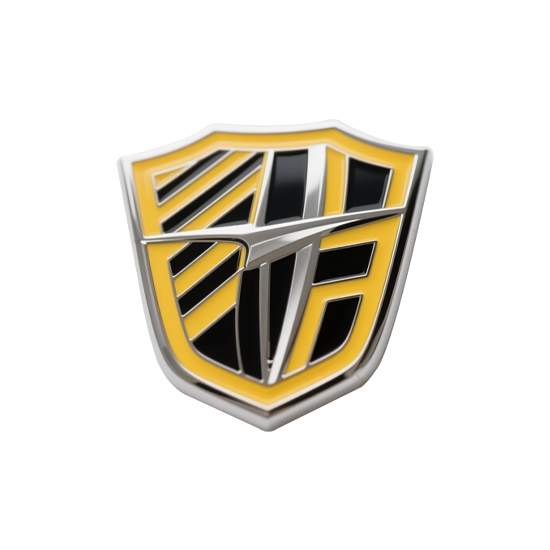
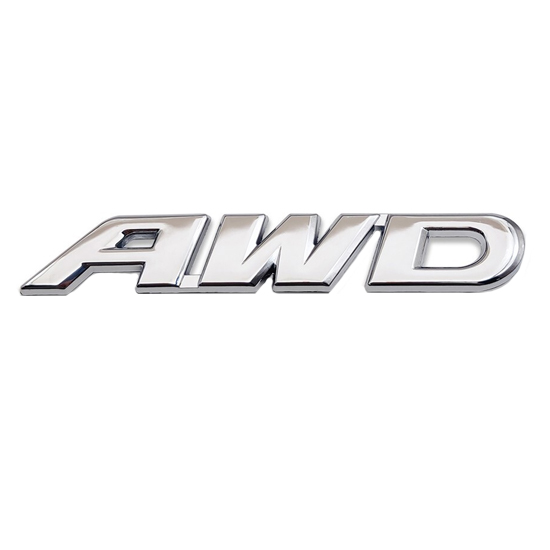
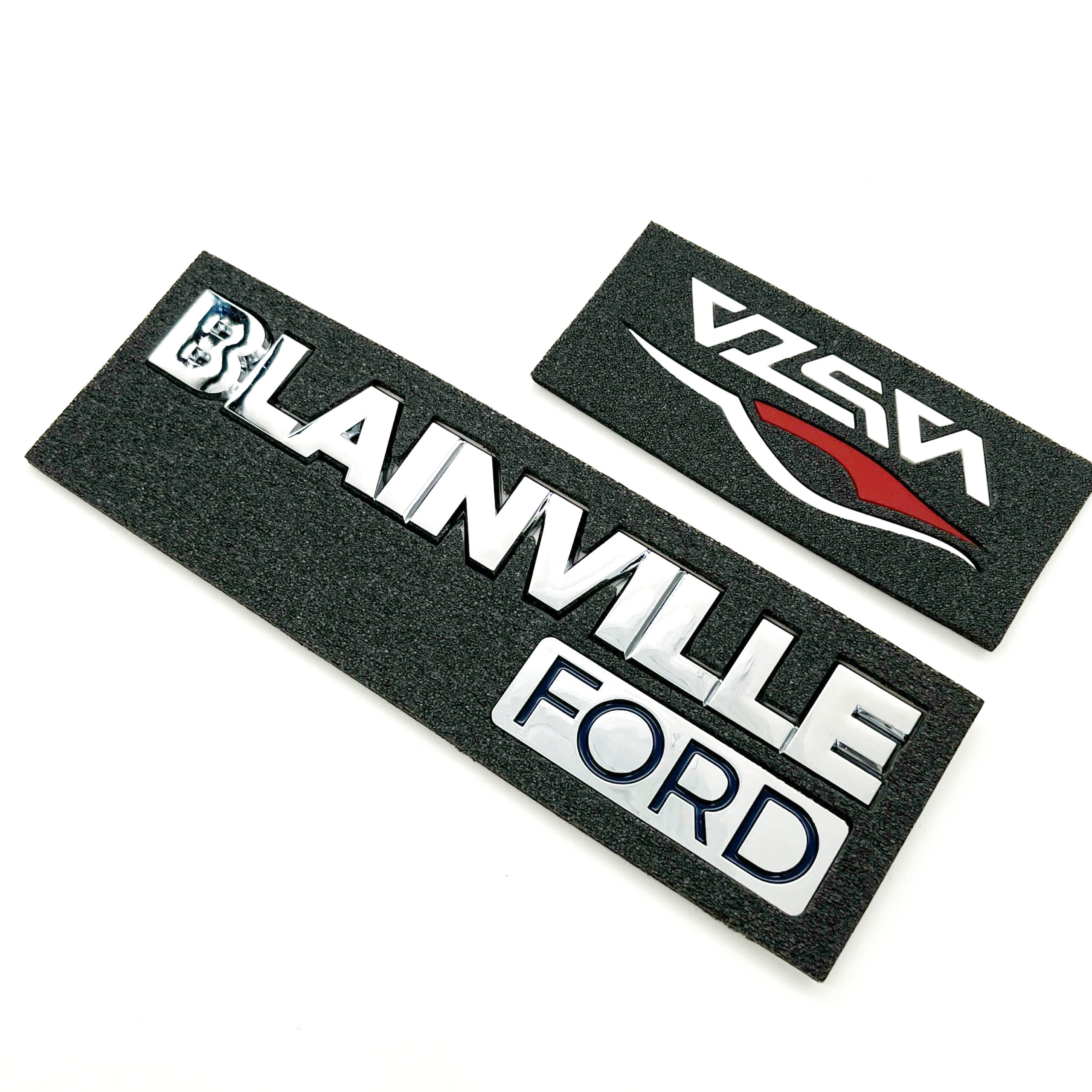
| Metal Emblems | Plastic Emblems |
|---|---|
| Premium appearance | Lightweight |
| Higher cost | Cost-efficient |
| Strong durability | Flexible design |
Metal Automotive Emblems in Real Use
Metal emblems are often chosen for one reason. Perceived quality.
They feel solid. They add weight. They reflect light in a way that plastic cannot fully replicate.
This makes metal a common choice for exterior branding and premium positioning.
However, metal emblems come with trade-offs.
Metal is sensitive to surface treatment. Without proper plating or coating, corrosion can appear. Poor finishing leads to peeling or dull surfaces. Sharp edges can also become an issue if tooling is not precise.
Weight is another factor. Heavier emblems require stronger adhesives or mechanical fixing. If this is overlooked, detachment can occur over time.
Metal performs best when finishing quality is controlled and application conditions are well understood.
Plastic Automotive Emblems in Real Use
Plastic emblems are often underestimated. In many cases, they outperform metal in consistency and stability.
High quality plastic allows precise molding. Dimensions remain stable across large production runs. This reduces fitment issues and visual variation.
Plastic is also lighter. This makes installation easier and lowers stress on adhesive systems. For many applications, this improves long term reliability.
Surface finishing plays a major role. Painted or plated plastic can achieve a clean and modern look. Poor material grade or rushed molding leads to fading and cracking.
Plastic works best when the right resin is used and production controls are strict.
Durability Comparison Under Real Conditions
Durability is not just about strength. It is about how materials react over time.
Metal resists impact well. It handles heat effectively. It can last for years when properly protected.
Plastic resists moisture and vibration better in many cases. It does not rust. It flexes slightly under stress.
UV exposure affects both materials. Metal relies on surface protection. Plastic relies on material formulation and coatings.
Neither material is immune to failure. Durability depends on how the emblem is designed and finished.
Appearance and Brand Perception
Appearance is one of the main reasons brands choose metal.
Metal signals weight and permanence. It is often associated with premium products.
Plastic offers more flexibility in shape and detail. It supports modern design language and clean edges.
Customers rarely see material alone. They see finish quality.
A well finished plastic emblem looks better than a poorly finished metal one. This is a reality many buyers learn too late.
Brand perception is influenced by consistency more than material type.
Cost and Production Considerations
Cost differences between metal and plastic are often misunderstood.
Metal tooling can be complex. Finishing adds additional cost. Scrap rates can be higher if processes are unstable.
Plastic tooling requires precision but offers lower cost per unit at scale. Production speed is usually faster. Consistency is easier to maintain.
Small production runs may favor metal for flexibility. Large volume projects often favor plastic for efficiency.
Experienced manufacturers evaluate cost across the full production lifecycle. Not just the unit price.
Manufacturing Tolerance and Consistency
Consistency is critical for automotive emblems.
Metal processes can introduce variation if finishing is not controlled. Small differences become visible under light.
Plastic molding delivers repeatability when tooling is properly designed. This makes it suitable for large scale branding programs.
Tolerance issues affect installation and appearance. These issues are often linked to manufacturing experience rather than material choice.
Consistency is where experienced manufacturers create the most value.
Choosing the Right Material for Your Project
Material selection should always start with application.
Exterior or interior. Static or exposed. Small batch or long term program.
Metal suits premium exterior use when finishing quality is guaranteed. Plastic suits high volume projects that require consistency and cost control.
There is no universal answer. There is only a suitable choice.
The best results come from matching material to real conditions rather than preference.
Comparison Summary
Below is a simple comparison you can present using a two column layout in Elementor.
Premium visual impact
Heavier weight
Sensitive to surface finishing
Higher cost in many cases
Lightweight and flexible
High consistency at scale
Lower cost efficiency
Requires proper material grade
What Matters More Than Material
Many emblem failures are blamed on material choice. In reality, the root cause is often manufacturing execution.
Tooling accuracy. Surface treatment. Quality control.
These factors define how materials perform.
In the next section, we will look at how experienced manufacturers choose emblem materials and avoid common production mistakes.
How Manufacturers Choose the Right Automotive Emblem Materials
Choosing automotive emblem materials is rarely about preference. It is about risk control.
Manufacturers do not ask which material looks better. They ask which material will perform reliably over time. They ask which option reduces failure rates. They ask which process can be repeated without variation.
This is where experience matters most.
Why Material Choice Alone Does Not Guarantee Quality
Many emblem projects fail even when the correct material is selected.
The reason is simple. Material is only one part of the equation.
Tooling quality affects edge sharpness and fit. Surface treatment affects durability. Production control affects consistency.
Two emblems made from the same plastic can age very differently. Two metal emblems can behave in opposite ways after exposure.
Manufacturers with experience understand this early. New suppliers often learn it the hard way.
The Role of Tooling in Emblem Performance
Tooling defines shape accuracy. It defines surface smoothness. It defines repeatability.
Poor tooling creates stress points. These stress points lead to cracks. They lead to uneven surfaces. They lead to premature failure.
High quality tooling reduces variation. It improves fit. It supports consistent finishing.
Experienced manufacturers invest time in tooling design before production starts. This step is often skipped by low cost suppliers.
Surface Treatment Is Where Most Failures Begin
Surface treatment determines how an emblem ages.
Metal emblems rely on plating and coating. Plastic emblems rely on paint adhesion and surface preparation.
Shortcuts in this stage cause peeling. They cause fading. They cause corrosion.
Many quality issues appear months after installation. By then the damage is done.
Manufacturers with long term experience test surface performance under real conditions. They do not rely on appearance alone.
Quality Control Is Not a Final Step
Quality control is often misunderstood.
It is not something done at the end. It is something applied throughout production.
Material inspection matters. Tooling checks matter. Finishing inspection matters.
Skipping early checks leads to expensive rework. It also leads to inconsistent batches.
Experienced manufacturers build quality into each stage. This reduces waste and improves stability.
How Experience Reduces Risk for Brands
Brands are rarely experts in manufacturing details. They rely on suppliers to guide material decisions.
Manufacturers with long term experience understand common failure patterns. They know which combinations work. They know which shortcuts cause problems.
This knowledge prevents repeated mistakes.
It also protects brand reputation.
Why Long Term Projects Require a Different Approach
Short term projects allow for flexibility. Long term projects demand consistency.
Automotive emblems used in branding programs must look the same across years. Color shifts are not acceptable. Finish variation is not acceptable.
Material selection for long term projects must consider repeatability. Supply stability also matters.
Manufacturers with established processes are better suited for these programs.
When Brands Should Ask for Manufacturing Advice
Material questions should be discussed early.
Waiting until design is finalized limits options. It increases risk.
Manufacturing advice helps align design with production reality. It reduces revisions. It shortens development cycles.
This collaboration improves outcomes.
Real World Insight From Manufacturing Experience
With over 25 years of experience in automotive emblem manufacturing, we have seen how small decisions lead to large consequences.
Many issues blamed on material choice are actually process issues. Others are tooling issues. Some are caused by unrealistic cost targets.
Experience allows manufacturers to see these risks before production begins.
This is where value is created.
Supporting Brands Beyond Material Selection
Material selection is only the starting point.
Successful emblem projects require stable production. They require clear communication. They require reliable timelines.
Manufacturers who understand branding goals can support these needs better.
If you are evaluating custom automotive emblems and want guidance based on real manufacturing experience, you can learn more about our approach here:
Final Thoughts on Automotive Emblem Materials
Metal and plastic automotive emblems both have valid uses.
The right choice depends on application. It depends on environment. It depends on production scale.
Most importantly, it depends on how the material is processed.
Manufacturing experience bridges the gap between design and performance.
For brands planning custom emblem projects, understanding this difference reduces risk and improves long term results.
👉 Free samples for the first 50 qualified inquiries
| Requirement | Best Option |
|---|---|
| Low cost, high flexibility | ABS plastic |
| Luxury appearance | Metal |
| Glossy, smooth look or curved surfaces | 3D resin |
| Lightweight for EV and motorcycles | ABS plastic |
| Scratch-resistant & long-term outdoor use | Metal / ABS |